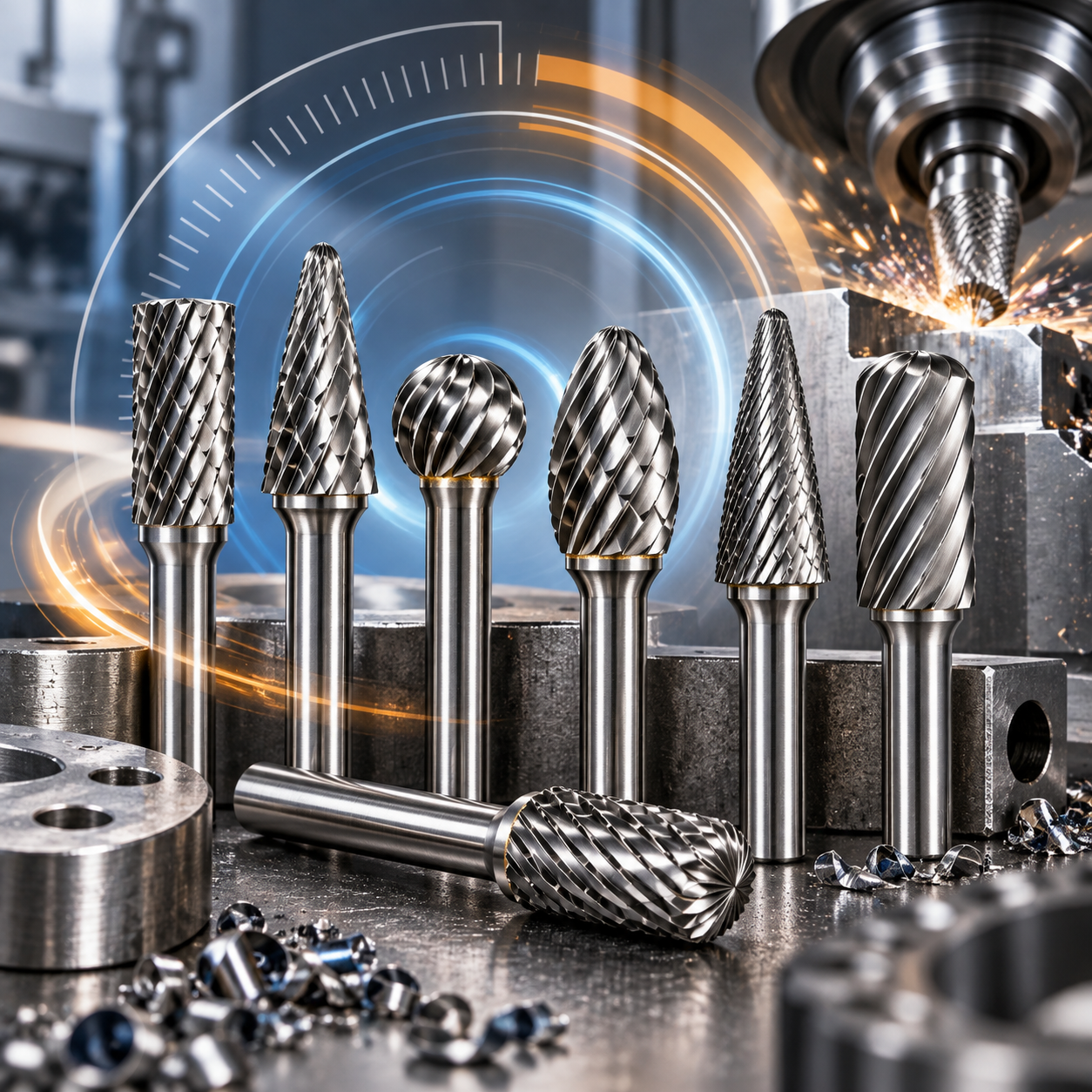
Choosing the correct cutting speed is important for getting the best performance from tungsten carbide burrs. The right combination of material, burr cut, burr diameter, and rotational speed can improve cutting efficiency, surface quality, and tool life.
Cutting Recommendations by Material
For steel and cast steel, Single Cut, Double Cut, or Steel Cut burrs are commonly used. Recommended cutting speeds are generally around 250–600 m/min depending on material hardness and application.
For stainless steel, Inox Cut is a suitable choice. A cutting speed of around 450–600 m/min is commonly recommended.
For soft non-ferrous metals such as aluminum, Aluma Cut is more suitable because its cutting geometry helps reduce clogging and improves chip removal. Recommended cutting speeds can reach approximately 600–1100 m/min.
For harder non-ferrous metals, Single Cut, Double Cut, or Steel Cut can be used depending on the material and machining requirement.
For plastics and fiber-reinforced materials, Diamond Cut, Double Cut, or Aluma Cut can provide efficient material removal and good control.
Burr Diameter and Rotational Speed
Rotational speed should be adjusted according to burr diameter.
Smaller burrs can generally operate at higher RPM, while larger burrs require lower rotational speeds.
For example, a 1.5 mm burr may operate at very high speeds, while a 20–25 mm burr should run at a much lower RPM.
This is important because excessive speed can increase heat and tool wear, while insufficient speed may reduce cutting efficiency.
How to Select the Correct Operating Speed
A practical selection process is:
- Select the material to be machined.
- Determine the machining application.
- Choose the appropriate burr cut.
- Select the recommended cutting speed range.
- Confirm the burr diameter.
- Match the diameter and cutting speed to the recommended RPM.
Correct speed selection helps provide smoother cutting, better chip removal, reduced vibration, and longer tool life.
For professional machining, always match the carbide burr type, material, diameter, and operating speed to the specific application.